

Research Groups
Exoplanet Group
Head: Prof. Dr Andreas Quirrenbach / Priv. Doz. Dr Sabine Reffert
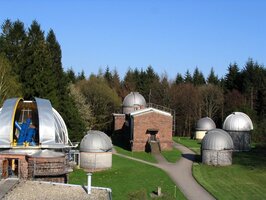
The exoplanet group at the Landessternwarte Heidelberg focuses on finding and characterizing exoplanets around various types of stars, among them M dwarfs and K giants. We mostly employ Doppler spectroscopy, but also look for planets with other kinds of methods such as direct imaging and astrometry. We use telescopes around the world as well as on the Königstuhl to look for the subtle signatures of planets.
A particular interest of the group are dynamical analyses of multi-planetary systems, which help to understand how planetary systems form and evolve.
Further Information:
Exoplanet Group
Heisenberg Research Group on Hot Compact Stars
Head: Dr. Nicole Reindl
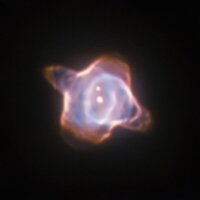
This group studies the late, hot stages of stellar evolution in order to uncover the various evolutionary pathways of sun-like stars. Objects of interest include hot white dwarfs, central stars of planetary nebulae, and H-deficient stars. The group analyses optical and UV spectra by means of NLTE models to derive the atmospheric parameters of these stars. In addition, they study light curves to investigate close and wide binary systems, or spots on hot white dwarfs.
Further information:
AGN Group
Head: apl. Prof. Dr Jochen Heidt
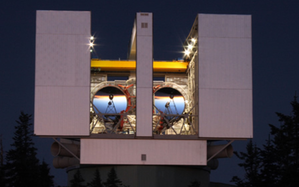
This group focuses on host galaxies and cluster environment of BL Lac objects and QSOs; Identification of optically selected BL Lac objects via polarimetry; Radiation processes in radio-loud AGN ( Polarimetric monitoring at San Pedro Martir); Black holes; Galaxy evolution (particular at high-z), deep fields (the FORS Deep Field). In addition this group is involved in Near-infrared instrumentation.
Link?
Extragalactic Astrophysics & High Energy Astrophysics Group
Head: apl. Prof. Dr Stefan Wagner
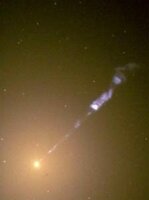
This group consists actually of two sub-groups. One focuses on extragalactic astrophysics, including topics such as multifrequency studies of Blazars, Emission lines of AGN, Hot spots in radio galaxies, high-redshift quasars, structure of spiral galaxies and morphological evolution of galaxies in clusters. The other group focuses on Very-High Energy Gamma-Ray Astrophysics, in the context of the H.E.S.S. collaboration. The H.E.S.S. is a Cherenkov Telescope system for the investigation of cosmic gamma rays in the 100 GeV energy range.
http://www.lsw.uni-heidelberg.de/projects/extragalactic/
http://www.lsw.uni-heidelberg.de/projects/hess/hess.phtml
Galactic Archaeology Group
Head: Prof. Dr Norbert Christlieb / Priv. Doz. Dr Hans-Günther Ludwig
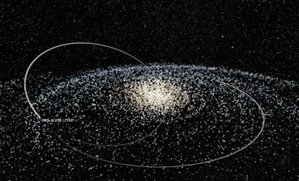
The Galactic Archaeology Group at Landessternwarte Heidelberg is concerned with the search for the most metal-poor and hence oldest stars of the Galaxy, and the determination of their chemical abundance patterns. These stars are important tools for studying, e.g., the formation and chemical evolution of the Galaxy, the properties (e.g., mass, rotation) of the first generation of massive stars which exploded as type II supernovae and nucleosynthesis processes that occurred in them.
http://www.lsw.uni-heidelberg.de/projects/galactic_archaeology/index.phtml
Instrumentation Group
Head: Prof. Dr Andreas Quirrenbach (last update: 25/07/30)
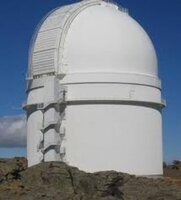
At the LSW various instrumentation projects are undertaken. These include CARMENES (the visual and near-infrared high-resolution planet-finding spectrograph for the Carlar Alto 3.5 m telescope), LUCIFER (the near-infrared imaging spectrograph for the LBT), 4MOST (4-metre VISTA), CUBES (VLT), ANDES (ELT) or MOSAIC (ELT).
